

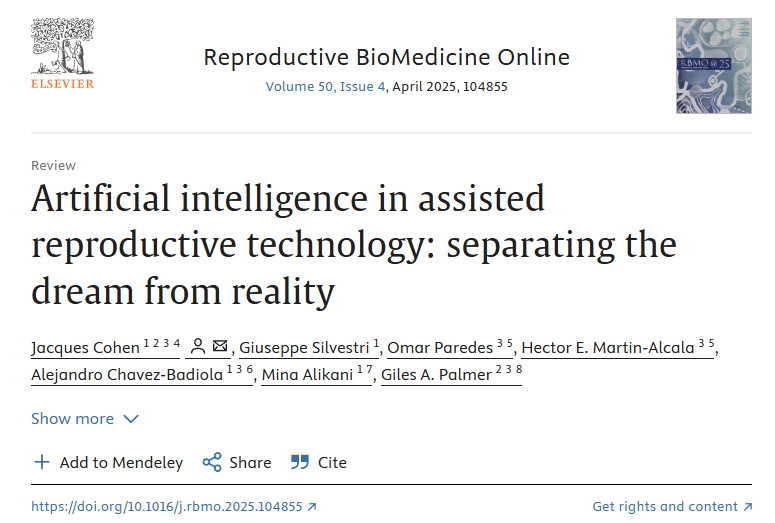
Artificial intelligence is rapidly entering the medical field, and assisted reproduction has become one of the most watched application directions. From embryo scoring and sperm selection to clinical management and laboratory automation, AI continuously refreshes people’s imagination of the future development of IVF. More and more people expect that it can reduce human variability, improve laboratory efficiency, and even help more families realize their dreams of having children.
However, after AI truly entered clinical practice, people found that reality has not developed as fast as imagined. Algorithms are constantly updated, and the number of related studies continues to grow, but technologies that can truly change IVF clinical work remain limited. How far has AI actually developed, and how far is it from truly changing assisted reproduction?
Why AI Has Become a New Direction for IVF
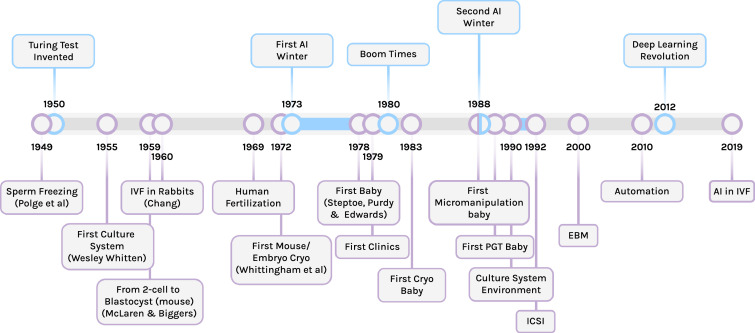
After decades of development, assisted reproductive technology has made significant progress. Key technologies such as blastocyst culture, vitrification cryopreservation, and genetic testing have been continuously improved, leading to a steady increase in overall IVF success rates. However, the development of some core technologies has gradually entered a plateau phase, and the room for further improving pregnancy outcomes by relying solely on traditional technologies is shrinking. At the same time, differences in culture systems, evaluation standards, and operational experience still exist among different laboratories. The same embryo may receive different morphological scores from different embryologists, and the consistency of evaluation results has always been an important factor affecting the standardization of assisted reproduction.
On the other hand, as the demand for assisted reproductive treatment continues to increase, the laboratory not only undertakes embryo culture and evaluation tasks, but also needs to complete a large amount of data recording, quality control, sample management, and clinical coordination tasks. The workflow is becoming increasingly complex, while the training period for professional embryologists is relatively long and human resources are always limited. In this context, AI is not only expected to improve predictive ability, but also hoped to undertake repetitive and highly standardized work, helping the laboratory improve efficiency, reduce human variation, and promote assisted reproduction towards a more standardized,intelligent direction.
AI is expanding the application boundaries of IVF
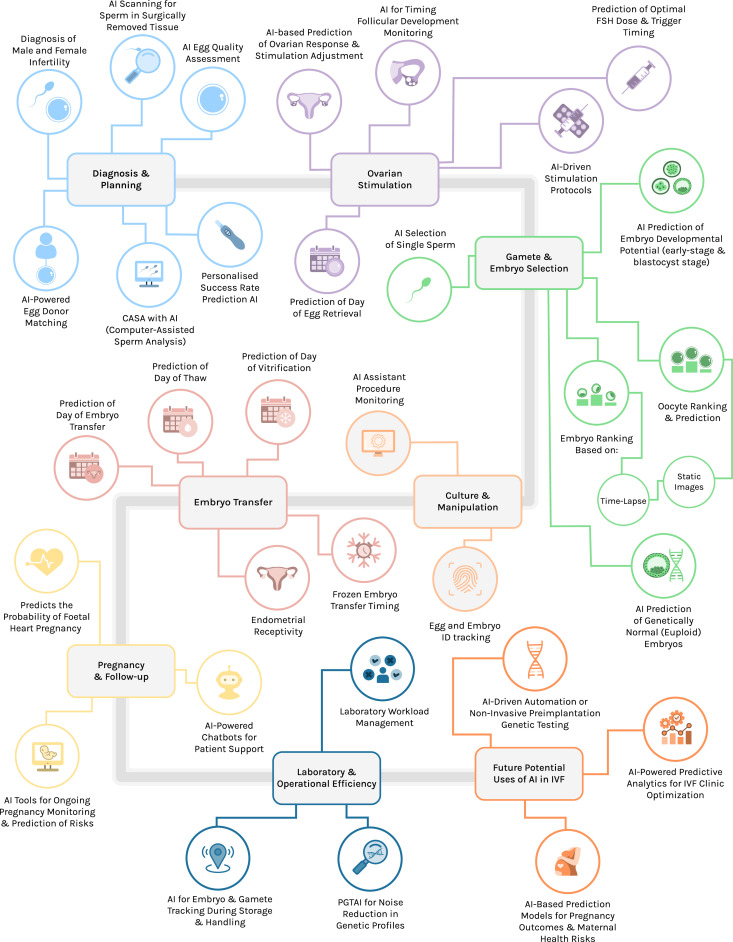
Currently, the application of AI has covered multiple key stages of assisted reproduction. In clinical management, it can assist in formulating ovulation induction protocols by combining patient clinical information, predicting the optimal trigger time, optimizing the timing of frozen embryo transfer, and assisting in patient management and treatment process optimization to improve clinical operational efficiency. In the andrology laboratory, AI can complete sperm motility parameter analysis, morphology recognition, and impurity detection, and is gradually being applied to ICSI sperm selection, automatic identification of sperm in testicular sperm extraction samples, and other tasks, improving analysis efficiency and consistency.
Oocyte and embryo evaluation are currently the most active areas of AI research. With the help of computer vision and deep learning technologies, AI can extract a large number of morphological features that are difficult to quantify with the naked eye from images, assisting in the prediction of fertilization potential, blastocyst formation rate, implantation potential, and pregnancy outcome, providing a more objective reference for embryo selection. At the same time, AI is gradually being integrated with robotics automation with the integration of technologies, automated ICSI, automated vitrification, and automated liquid handling have entered the validation stage. In the future, AI will not only perform image analysis but may also participate in micromanipulation and laboratory automation processes, allowing embryologists to devote more energy to higher-value tasks such as quality control, complex decision-making, and patient management.
Research is heating up, but clinical application still awaits validation
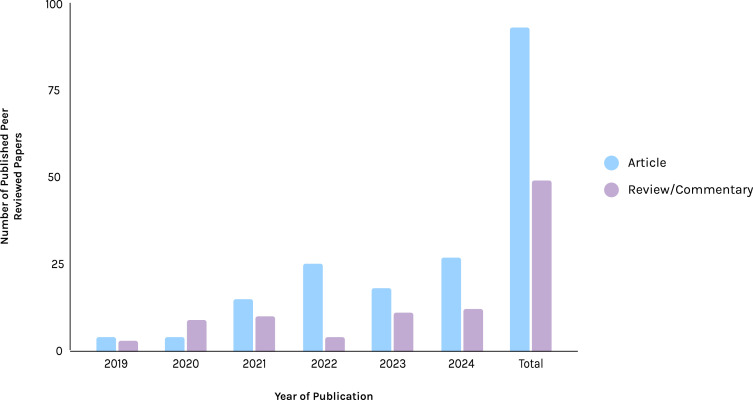
In recent years, the number of AI studies in assisted reproduction has grown rapidly, but research popularity does not mean clinical application is mature. Much work still focuses on algorithm optimization, such as improving network structures, training strategies, or model parameters, with many iterative improvements on existing technologies, while truly breakthrough results that can change clinical practice remain limited. At the same time, a considerable portion of the literature consists of reviews or opinion pieces, and the number of original studies that have been fully validated is relatively limited.
More notably, many current AI models focus on embryo grading, morphological scores, or laboratory indicators, while research related to real clinical outcomes that patients care most about, such as pregnancy rates and live birth rates, remains insufficient. Many models are built on single-center data, and differences in culture systems, equipment platforms, and patient populations across laboratories mean their generaliz ability Further validation is still needed. Existing research shows that AI-assisted embryo selection can achieve evaluation levels comparable to experienced embryologists, with advantages such as fast evaluation speed and high consistency, but there is still insufficient evidence to prove that it can continuously and stably improve clinical pregnancy rates or live birth rates. Therefore, the value of AI in assisted reproduction still requires further validation through more high-quality, multicenter clinical studies.
There is still a gap between ideal and reality
For AI to truly integrate into clinical practice of assisted reproduction, it is necessary not only to continuously improve predictive performance but also to address practical issues in data, ethics, management, and application. Large-scale model training relies on massive clinical data; how to protect patient privacy and data security is an important issue that must be faced during promotion. Data differences between different countries, regions, and laboratories may also cause model bias, affecting the stability and generalizability of prediction results. At the same time, many current AI models are still “black box” systems, lacking sufficientinterpretabilitymaking it difficult for doctors and embryologists to understand the basis of the model’s judgments, which also affects clinical trust and practical application.
Beyond the algorithm itself, AI also needs to face real-world challenges such as ethical oversight, regulatory development, and integration with laboratory workflows. Truly clinically valuable AI in the future must not only possess reliable predictive capabilities but also integrate naturally into existing workflows, undergo thorough external validation, and establish a transparent, trustworthy, and standardized application system. The direction of AI development is not to replace embryologists, but to enhance the standardization and overall efficiency of laboratory work through intelligent assistance and automation, allowing professionals to focus more on complex decision-making, quality control, and patient services.
Summary
Artificial intelligence is bringing new development opportunities to assisted reproduction. From laboratory management to embryo assessment, from intelligent analysis to automated operations, AI continues to expand the boundaries of assisted reproductive technology and offers new possibilities for future laboratory construction.
However, truly clinically valuable AI requires not only excellent algorithmic performance but also validation in real-world clinical applications. Only by establishing a high-quality data foundation, improving multi-center validation systems, enhancing model interpretability, and achieving deep integration with clinical workflows can AI truly move from technical exploration to clinical practice and deliver more stable, reliable, and lasting value in the field of assisted reproduction.